Episode Transcript
[00:00:10] Speaker A: My name is Leland Hale. I'm the author of Butcher the True Crime Story of Serial killer Robert Hansen.
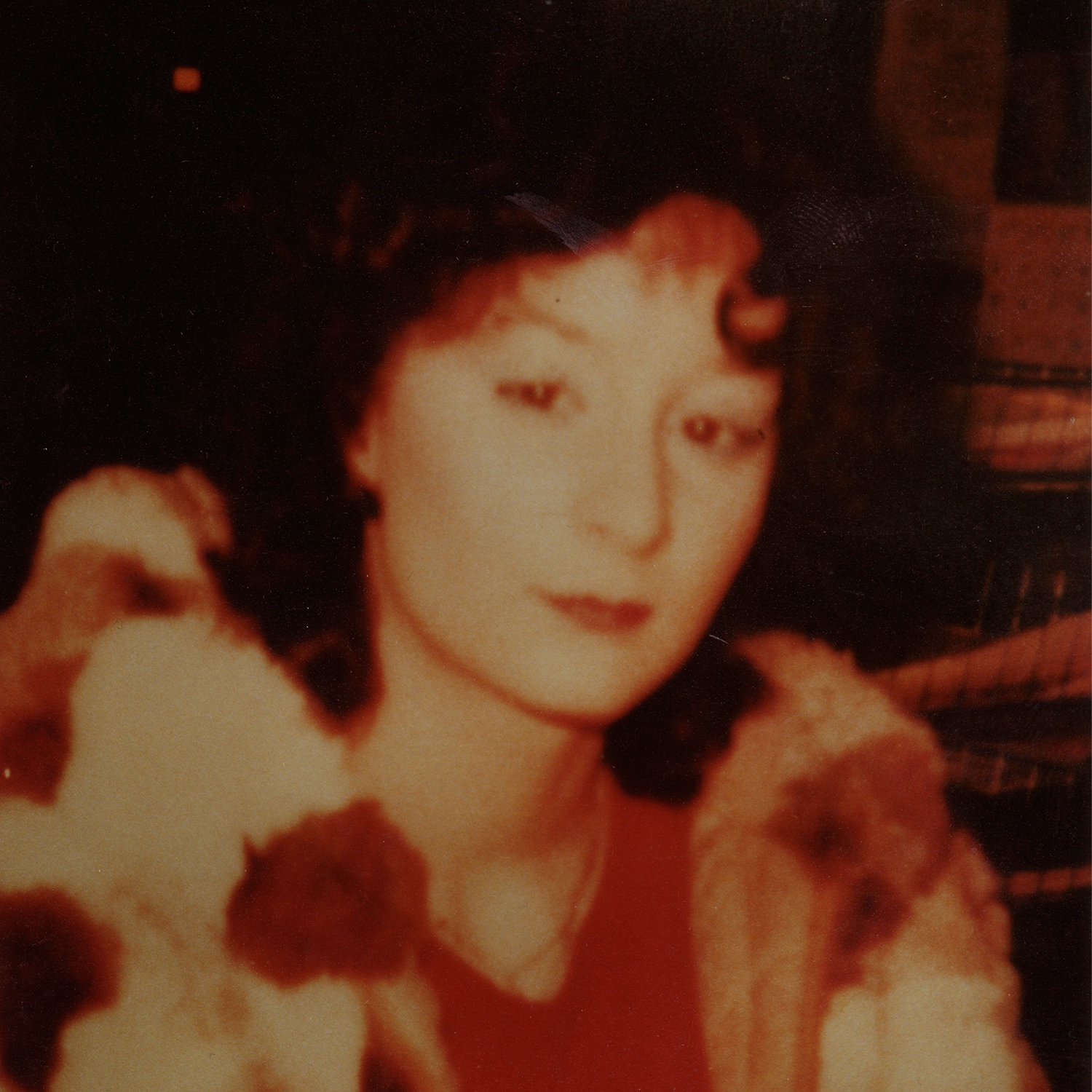
[00:00:18] Speaker B: My name is Cindy Paulson. This is my story.
[00:00:33] Speaker A: At age 17, Cindy Paulson escaped from serial killer Robert Hansen. Her escape ultimately led authorities to Hansen's arrest and conviction on four charges of murder.
Ultimately, Hansen confessed to 17 murders. But there were more. A flight chart found in his headboard contained 24 marks.
Cindy was one of the lucky ones.
Note this podcast features adult themes and some salty language. Lizard. Discretion is advised.
[00:01:12] Speaker C: Episode 3 God Put Me there to.
[00:01:16] Speaker D: Get him because I shouldn't even have been born. My mom should had.
[00:01:23] Speaker C: Abortion, which she didn't.
[00:01:24] Speaker D: I think God just led me towards that, that I was able to catch him and God put me in his path so that no more other women had to die.
[00:01:38] Speaker A: That statement needs a lot of unpacking. It's not like Cindy arrived in Anchorage and announced, where's Hansen? Take me to Robert Hansen. As the saying goes, the Lord works in mysterious ways. In Cindy's case, she was on her own from an early age. She turned her first trick at age 12, ended up getting picked up for solicitation in Denver, and then was sent back to Seattle and juvenile hall, where she got a visit from her grandmother. This visit marks a critical waypoint in Cindy's life.
[00:02:17] Speaker E: I was in Denver, I got busted. So they sent me from Denver to Seattle group to Seattle Juvenile Hall. She hadn't come see me there, and.
[00:02:29] Speaker C: That didn't turn out too good.
[00:02:31] Speaker E: But she did tell me, my love for you knows no bounds. I don't care if you stood up in an auditorium full of people and took a gun out and shot them all.
I will still love you.
But when are you going to stop this?
[00:02:47] Speaker C: I said, I don't know.
[00:02:49] Speaker E: I just, you know, I'm. I'm already too far advanced in my life to change this.
[00:03:01] Speaker A: Whether she knew it or not, Cindy was now on the path that sent her toward Anchorage.
Now, let's be clear.
At no point was it inevitable. Although in retrospect, it certainly looks a lot like it was.
[00:03:18] Speaker E: 13, 14, I get out at Quinault Echo Glenn. Okay, okay, 14, 15, we come out, I'm in Seattle.
[00:03:29] Speaker C: And.
[00:03:31] Speaker E: I think that's when I met Cleave and the Nobles and all them and some other people that it first.
[00:03:45] Speaker C: Told me about Alaska.
And I thought, so I get with.
[00:03:49] Speaker E: Cleave, we take a drive. I have a birthday. We take a drive to Texas and hit all the spots along the way, and then we go to Hawaii and We're there for about three weeks a month. You know, the hot. It was expensive.
And then we fly back, and we're.
I don't think we went to Seattle. I think we went to Portland. And we're working downtown Portland and on Burnside.
[00:04:19] Speaker F: Yeah.
[00:04:20] Speaker B: Yeah.
[00:04:20] Speaker F: So how old are you now?
[00:04:23] Speaker E: About 15.
I'm 15, and I'm considered a vet.
[00:04:28] Speaker C: I know what's going on. I know what the deal is and everything.
So we're making money. I make about 200 a night there in Portland, that's about all you can really make.
That's just how it was. And then I got. I just got to the part where, you know, they got to see me too much. In Portland, in the world of sex.
[00:04:52] Speaker G: Work, the police are always breathing down your neck.
Sometimes you gotta move.
[00:05:00] Speaker F: If you're gonna say, like, on average, how long is it? Can you stay somewhere before you get hot?
[00:05:10] Speaker E: Well, probably about three or four months.
[00:05:19] Speaker A: In the midst of this, Cindy leaves her. Then current pimp literally hides out till he leaves town. He's violent and angry.
It's not long, however, before she has a new pimp.
But first, she has to pay the tax for choosing him, knowing I need.
[00:05:37] Speaker C: To get the out of here or find somebody, you know?
And I see Nate, and he's got this black Cadillac. So I'm there for a while, and I find more out about him. He's not with nobody.
And so I meet him and I tell him, okay, check this out.
[00:06:02] Speaker A: I'm.
[00:06:03] Speaker C: I want to choose. And I give him the money.
So the money I gave him, he took his black Cadillac in and traded it in for another one cream and white Cadillac. And then everybody knows I chose. And then I'm. I'm with Nate. Everybody's talking about it. We stay apart from everybody else, and they're all talking, all the other pimps, popcorn pimps coming. Oh, so you chose.
[00:06:36] Speaker A: The notion of choosing is one of many rituals common to the sex trade.
In an effort to get a new pimp to take her on, it's up to the woman to prove her worth.
Simply put, that means tossing him some money.
In exchange, the woman allegedly gets the pimp's protection notice. I said allegedly.
That's because for the most part, she's on her own.
[00:07:01] Speaker C: And something happened on the top floor of this parking garage where it's. It's. It's in downtown.
It's downtown Portland.
One corner is McDonald's, and there's a square track, and the cars can just drive around the track on the right hand Side is this parking garage, and then down the road this way is job corps.
Well, I was. I was in the parking garage and I was turning the trip, and something evil, sinister happened to a man in there.
And I don't know what it was, but it was evil and sinister. They, they. I don't know if it was a mob hit or somebody killed him, but I know somebody died there and he was killed. And I didn't look to go back. I just left. And nothing ever came of it, you know what I mean?
[00:08:15] Speaker E: Nobody.
[00:08:15] Speaker C: I just know I had to get the hell out of there and I kept my mouth shut.
[00:08:20] Speaker A: In this case, leaving to does not mean leaving the life. Oh, and by the way, where was her pimp?
Actually, this is where the hov vine comes in. The hov vine is the word on the street, kind of like the grapevine.
[00:08:47] Speaker G: It's how pimps and sex workers know if there's a sweep coming. Tells them where to go next, where the best money is. It also tells them if someone's undercharging, which they need to know.
[00:09:00] Speaker A: Here's how Cindy describes it.
[00:09:04] Speaker D: Stuff like that gets out right away.
[00:09:06] Speaker E: You know, we.
[00:09:07] Speaker D: We're. We're the hope there's a whole vine. We're. We're usually the first to know, you know, if somebody's undercharging. We know.
[00:09:16] Speaker A: According to the hovine, the time was ripe to leave Portland. It, of course, is a bit of a random walk.
You know, you can go left, you can go right, you go south, you go north, all the way to Alaska, where you stop, nobody knows.
Actually, they chose California. They chose San Francisco.
When they got there, they were going to up their game.
[00:09:47] Speaker C: We had flown from Portland to San Francisco, and I was working in San Francisco with Tiffany, XC's girl.
And all we did were hotels.
Nothing on the street. Hotels, lounges.
He wore a silk dress, pumps, and a fur.
And we, we had been having some really good luck and hitting some licks. We got some, A lot of, what do you want to call them? Iranians with suitcases of money.
[00:10:30] Speaker F: Arabs. Arabs are not Arabs.
[00:10:34] Speaker C: Not Iranians, Arabs.
And these Arabs, they would have suitcases full, five, six girls in the room. And me and Tiff. And you know what? Me and Tiff know what we're doing. Them other girls don't got a clue. We're going for a suitcase every time. Or the boots, especially the boots, because that's where they would stash it.
And we would bring home five to 800, maybe 2,000.
One night was 5,000 and then they got this big idea to send us to Alaska.
[00:11:15] Speaker A: Now you've got to decide if this is a random walk or God's hand. But at the very least, Cindy is one step closer to Robert Hansen.
[00:11:26] Speaker C: Because we were hitting really good licks in San Francisco and we had come up with, you know, you're talking Rolexes.
[00:11:38] Speaker E: It makes you hot.
[00:11:40] Speaker C: Makes you hot when you're going to the Hilton and you have a date and the Rolex is gone or yeah, you know, the jewelry. Yeah, yeah. So you got to get away for a while.
[00:11:54] Speaker E: So after a while of that, he.
[00:11:57] Speaker C: Sent us to Tiffany to actually sent Tiffany with me and I. Nate sent me with Tiffany to Alaska. And we stayed in a motel on Spinar Drive. Rooms right next to each other or down the way.
And we went out at about 10, 11 o' clock at night. We got a cab driver.
Once you get a good cab driver. I had a red haired one and always had weed so I could have a little puff. Nate's not around, you know, but that's your, that's your driver. He, you know, even if it's only $10, it's always a 20 or, you know, he takes you somewhere, he gets you out of a mess, it's 20 or 40, you know what I mean? So he, whenever you call him, he's right there, no matter what. He, as long as he's paid, you got a driver no matter what.
And, and you know what?
[00:12:56] Speaker G: I.
[00:13:32] Speaker A: If you're keeping track, Cindy, in five short years has been Parliament, Hawaii, Texas, San Francisco, back to Portland.
And that's just a high level review.
Other places, of course, many other places.
Now at this point, there's a few things I need to fill in.
They didn't get recorded.
I apologize. Cindy apologizes. But you need to know a couple other things, so we'll fill in right now. Okay?
First up, the redheaded cab driver.
He was the one who let Cindy know where the track is. Fourth Avenue, downtown, Anchorage.
Secondly, she had no fur coat. It was cold, probably late winter or March, which in Alaska is the same thing.
She doesn't remember what month it was. It was cold to me. She told me she made $700 the first night.
There's a little footnote about Nate. He had a no drug policy. So of course, when she was not with Nate, she dabbled.
Finally, and perhaps most importantly, the first cop she met was a guy named John Gentile, a vice cop working the streets just like Cindy.
[00:15:23] Speaker E: But anyway, Gentili was laid back and one of his things was he wanted to know every girl that came up on.
[00:15:31] Speaker C: On the up to.
[00:15:33] Speaker E: Up to Alaska. He wanted a rapport with them. So if something did happen, he knew who, when, where, what, and to get a picture of him so he could.
[00:15:43] Speaker C: Identify him, you know.
[00:15:45] Speaker E: But yeah, gentile, he was the. He was the vice cop. He was, that was his job. But he was, he was cool. He was laid back, you know, he would talk to us, tell and tell us, you know, it's cold, you know.
[00:16:03] Speaker C: They'Re going to do sweet.
[00:16:05] Speaker E: You guys watch out, you know, he was like that.
[00:16:10] Speaker A: As a newbie to Anchorage, however, Cindy is blissfully unaware that a serial killer is on the loose.
It was a crazy place. Even in winter, it seemed like the women were wearing nothing more than a fur coat. And yeah, blissfully unaware.
Probably not the right word, but I asked her, did she know about the women going missing?
[00:16:37] Speaker E: Nobody had told me anything about that.
The cops were keeping that all hush hush.
[00:16:42] Speaker F: No, that was all over the newspapers.
[00:16:45] Speaker E: I. I didn't read newspapers.
[00:16:46] Speaker F: Yeah, that was big time in the newspapers. It was on all the TV stations.
[00:16:51] Speaker E: You got to remember, I kept work hours.
I slept all day and I was up all night.
[00:16:59] Speaker F: So. Did you ever watch tv?
[00:17:02] Speaker C: No.
[00:17:03] Speaker E: I was working during that time. Come on now.
[00:17:09] Speaker F: So the fact that you'd only been there a month may explain why you just didn't know that, you know, that the women of working in Anchorage were in some danger.
[00:17:23] Speaker D: Nobody was saying anything about anything like that. Maybe I had been there longer than a month, but I mean, I was making money. I was making 500 to a thousand dollars a night.
So was everybody else. We were hanging out, kicking it, you know, every night get our little bottles, our little shot bottles.
We were running and gunning, you know, doing our thing.
[00:17:49] Speaker A: Even though Cindy hadn't noticed someone else had.
[00:17:54] Speaker G: Anchorage police homicide investigator Maxine Farrell was among the earliest to spot the trend. The topless dancers and sex workers of.
[00:18:03] Speaker A: Anchorage were increasingly turning up missing.
[00:18:07] Speaker G: The first one was discovered in 1980.
[00:18:09] Speaker A: Near a power line in Eklutna, north of the city.
[00:18:13] Speaker G: She definitely was a city girl, Farrell.
[00:18:15] Speaker A: Told reporters she had been dead about.
[00:18:18] Speaker G: 10 months or so.
[00:18:19] Speaker A: Over the next few years, Farrell's list grew. So much so that she made a.
[00:18:24] Speaker G: Point of going to topless and bottomless.
[00:18:26] Speaker A: Clubs, warning the dancers of the danger.
[00:18:29] Speaker G: Cindy's pimp had other ideas, and his.
[00:18:32] Speaker A: Rules put her straight in Robert Hansen's path.
[00:18:39] Speaker E: And it. And see, he didn't like me to work with other girls. He always wanted me to work across the street, not with the other hoes. If he drove down the street and see me with the other girls, he would get mad and I'd get my ass whooped. I was always supposed to be off by myself, taking care of his business.
[00:19:00] Speaker A: Although we've touched on this before, there's another reality that's even more obvious. Turning tricks is always a risk.
Cindy took that as an occupational hazard. But she was, after all, a vet, and she'd seen everything and survived.
Nevertheless, I asked her if she had an experience where she came close to trouble and whether she'd escaped. I mean, obviously she did, but how close was she.
[00:19:40] Speaker C: There?
[00:19:41] Speaker B: There's a lot there where they want to keep me there and take my money.
And I always keep my money in my shoe. And they would be checking my bra and stuff. And I said, I don't have no money.
[00:19:55] Speaker C: And they would rape me, of course.
[00:19:58] Speaker B: And when they would go or in the other room to try and get something to tie me up with or something, they would come back, and inevitably I would tell them, you don't got to do this. It's okay.
And I would run out the door, fight them back.
You know what I mean?
[00:20:21] Speaker C: I was pretty tough.
[00:20:24] Speaker B: Things like that, or else, you know, I didn't really try to put myself in them situations.
You're. I'm a good picker for that. I didn't. I didn't do that.
You know, you could. You could kind of tell, you know, I didn't want to be around that type of person.
So you don't pick that type of person.
[00:20:48] Speaker A: So that was the rule.
Here's the consequence. We're going back, by the way, to 1983.
We're listening to Cindy tell Glenn Flothi what happened.
[00:21:03] Speaker H: I was on corner for King Denelli, and the gentleman here rode by holding a parking lot and offer me, you know, I got in the car voluntarily, was talking with this man, and he offered me $200 for a blow job in the car.
And I said, fine, no problem.
And we pulled over to the side by side of the house, and I proceeded to give him a blow job.
And after I had got the condom on, we. I kept doing it. And then he kept going around my neck like he was just tripping, playing around with my neck. And my neck was.
And he had cuffed one of my hands, and I was trying to get loose, and he pulled out a gun and he got my other hand cuffed. I don't know how he did, just from fighting him, because I didn't really I fought, but not a lot, because I knew I could do something that's.
[00:22:10] Speaker A: A little hard to understand. So let me translate.
She agrees to have sex with him in his car.
Not uncommon.
He starts playing with her neck and then soon finds herself in handcuffs with a gun pointing at her face.
She's his captive.
[00:22:34] Speaker G: What's notable here is how close she came to not meeting with Robert Hansen. There was a series of missed opportunities on his part and a sense of evasion of sorts on her part.
Let's take a listen.
[00:22:54] Speaker I: About how long did you have contact with him on Friday?
[00:22:57] Speaker H: About 10 minutes.
[00:22:58] Speaker I: And then he contacted you on Saturday?
[00:23:01] Speaker H: I talked to him and made an appointment to meet him. And I didn't show up.
[00:23:04] Speaker I: And then you overslept and consequently didn't meet him?
[00:23:08] Speaker H: Uh huh.
[00:23:10] Speaker I: And when did you hear from him again?
[00:23:12] Speaker H: Well, I did. I saw him the next day. Sunday.
[00:23:16] Speaker I: Did he call you first or did he just come by?
[00:23:18] Speaker H: He just drove by.
[00:23:31] Speaker A: So let's summarize.
Friday, he was there for 10 minutes. She said he seemed like a pretty good guy.
Saturday, remember, he had her phone number. He called, she made a date, but she didn't show up. She overslept.
So Sunday she went back to work on the street near the Sheraton Hotel. And there he was. He just drove up.
So there you are, three chances to miss Robert Hansen. And the last one fails.
Let's go back, shall we, and get a sense of how it was.
We start with Glenn Flothi. September 1983.
[00:24:24] Speaker I: Ron, time is 8:15.
Cindy, I noticed that you're visibly upset and have tears and crying and apparently you're bothered by this.
[00:24:35] Speaker H: Yeah, it's real hell. Yeah, I'm bothered by it.
[00:24:43] Speaker I: Did you feel that he was going to hurt you?
[00:24:46] Speaker H: You know, I didn't feel nothing. I knew I wasn't gonna live.
I mean, the man, what he did to me. He had to kill me.
[00:24:56] Speaker A: He had to kill me.
From this single statement, we know two things. First, Cindy survived.
She's alive.
Second, Robert Hansen is still free.
Get that. Still out on the loose. She didn't bring him in.
She didn't.
Not yet.
Not yet.
[00:25:37] Speaker G: Cindy and I both thank you for listening. We acknowledge that our story is often gritty and sometimes painful.
That said, we promise not to sugarcoat anything.
[00:25:53] Speaker A: See you next time.